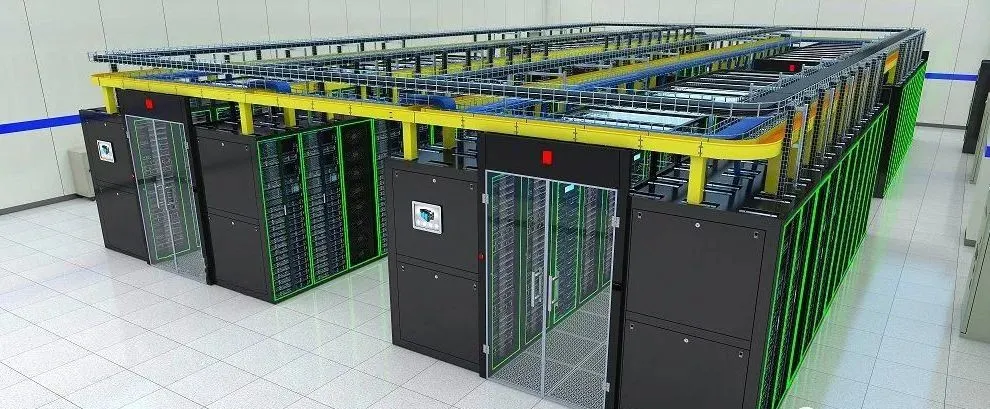
In the demanding landscape of 2025, where artificial intelligence and edge computing generate unprecedented heat loads exceeding one hundred kilowatts per rack, the precision air conditioning unit stands as a critical technology, offering advanced in-row cooling solutions that ensure optimal performance and energy efficiency in mission-critical environments.
The Fundamentals of Precision Air Conditioning
A precision air conditioning unit is a specialized system designed to provide exact control over temperature, humidity, and air quality in spaces housing sensitive electronics, such as data centers and server rooms. These units go beyond standard comfort cooling by maintaining conditions within extremely tight tolerances, often limiting temperature variations to plus or minus half a degree Celsius and humidity to within three percent. This level of accuracy is essential because even minor fluctuations can lead to equipment failures, data corruption, or reduced processing efficiency in high-stakes IT operations. At its core, the system focuses on sensible heat removal, which targets the dry heat produced by servers and networking gear, while incorporating features like variable-speed compressors and electronically commutated fans to adapt dynamically to changing loads. In data centers, where global data generation is surging, these units prevent overheating that could otherwise cause thermal throttling, where processors slow down to manage heat, potentially impacting performance by up to thirty percent. Their continuous operation distinguishes them from intermittent residential systems, ensuring reliability around the clock.
Historical Progression and Current Market Landscape
The development of precision air conditioning began in the mid-twentieth century with basic cooling for early computers, evolving through the decades as computing power increased. By the nineteen eighties, microprocessor controls allowed for more refined regulation, and the two thousands introduced energy-efficient variable components amid rising environmental concerns. Today, in 2025, the market for these units in data centers is valued at around two point five billion dollars, projected to reach three point eight billion by 2030 with a compound annual growth rate of seven point three percent, driven by the expansion of hyperscale facilities and the need for sustainable solutions. In-row designs, in particular, are seeing robust growth, with the segment expected to approach eight point eight five billion dollars in the coming years, reflecting the shift toward modular and efficient cooling amid artificial intelligence proliferation. This evolution underscores the technology’s adaptation to denser infrastructures, where traditional perimeter cooling falls short.
Operational Principles and Components
The operation of a precision air conditioning unit relies on a sophisticated refrigeration cycle optimized for non-stop performance. Warm air from the return path is drawn over evaporator coils, where refrigerant absorbs heat, cooling the air before it is propelled back into the space by variable-speed fans. The compressor pressurizes the refrigerant, expelling heat through condensers that may be air-cooled or water-assisted, depending on the configuration. Humidity control is achieved via dedicated dehumidification processes, such as staged coils that condense moisture without excessive cooling, often complemented by ultrasonic humidifiers for dry conditions. Sensors throughout the unit monitor parameters multiple times per second, feeding data to microprocessor controllers that use proportional-integral-derivative algorithms for instantaneous adjustments. In high-density setups, in-row units position cooling directly between racks, capturing hot exhaust immediately and supplying conditioned air horizontally, which shortens air paths and enhances response times. Capacities vary from compact five point six kilowatt models for edge sites to powerful ninety point one kilowatt systems for enterprise data halls, with airflows reaching sixteen thousand cubic meters per hour.
Varieties of Precision Air Conditioning Units
Precision air conditioning units come in diverse forms to address specific facility requirements. Air-cooled direct expansion models, with capacities from seven point five to seventy-five point five kilowatts, use external condensers to reject heat and are suited for locations lacking water infrastructure, incorporating eco-friendly refrigerants like R410A for efficiency ratios up to twenty-eight point nine in free cooling modes. Packaged units provide compactness for constrained spaces, offering five point six to ten point eight kilowatts with integrated elements to avoid outdoor installations. Chilled-water variants, ranging from thirty-two point nine to ninety-three point two kilowatts, tie into central systems for scalable operations in modular or containerized environments, utilizing motorized valves for flow precision. Pumped refrigerant systems deliver twelve point eight to ninety point one kilowatts, ideal for avoiding water-related risks in sensitive areas, with low pump power around zero point five five kilowatts. Hybrid designs blend air and liquid cooling, supporting ultra-dense artificial intelligence clusters by managing room-level conditions alongside chip-specific fluid circulation.
Advantages for Data Center Operations
Deploying a precision air conditioning unit offers numerous benefits that enhance overall data center efficiency and resilience. Energy savings are significant, as variable-speed components and smart controls reduce consumption by twenty to fifty percent during partial loads, which are common in variable IT environments. Sustainability is bolstered through low-global-warming-potential refrigerants and economizer features that harness ambient air, potentially lowering emissions in moderate climates. Reliability features, including redundant circuits and automatic failover, minimize downtime risks, crucial when interruptions can cost over one hundred thousand dollars per hour in sectors like cloud computing or finance. Improved air filtration captures contaminants, extending equipment lifespan by preventing dust accumulation on components, while precise humidity regulation averts corrosion and static discharge that could lead to data errors. These units also support higher rack densities, allowing facilities to maximize space without sacrificing performance, and their intelligent monitoring provides real-time insights for proactive management, ultimately contributing to long-term cost reductions.
Integration with Advanced Airflow Strategies
To optimize performance, precision air conditioning units are often combined with strategic airflow management. Hot aisle cold aisle arrangements segregate intake and exhaust flows, with containment enclosures increasing capacity by thirty to fifty percent by curbing air recirculation. In-row placements excel in this setup, reducing air travel and enabling swift responses to heat spikes from graphics processing unit tasks. Emerging in 2025 are hybrid integrations, where air precision complements liquid cooling for handling densities over one hundred kilowatts per rack, maintaining environmental stability across the facility. Free cooling mechanisms introduce outdoor air during favorable weather, cutting mechanical demands, and artificial intelligence refines fan speeds and damper settings based on sensor-generated heat maps, further elevating efficiency.
Maintenance Practices for Sustained Efficiency
Maintaining a precision air conditioning unit involves systematic protocols to preserve functionality and extend service life. Monthly filter changes prevent obstructions that might increase energy use by thirty percent, while quarterly coil cleanings ensure effective heat exchange and block microbial growth. Annual refrigerant inspections identify leaks promptly, upholding capacity and environmental standards. Lubrication of mechanical elements and sensor calibrations sustain accuracy, with predictive analytics monitoring trends to anticipate issues, facilitating repairs during off-peak times. For in-row models, modular access simplifies servicing without relocating units, minimizing operational impacts. This diligent approach can prolong system longevity beyond twenty years, aligning with manufacturer guidelines and reducing unforeseen expenses in high-reliability settings.
Innovations and Future Directions in 2025
As of December 2025, innovations in precision air conditioning units are accelerating, particularly with artificial intelligence-optimized systems that predict cooling needs using workload forecasts and external data, trimming energy by an additional thirty percent. Liquid cooling hybrids are gaining traction for artificial intelligence data centers, where precision air serves as the overarching control while fluids tackle intense heat growth. Modular coolant distribution units, now capable of two megawatts in in-row formats, support sustainable designs with Internet of Things monitoring for real-time adjustments. Market trends point to growth exceeding ten percent annually through 2032, propelled by edge expansions and green regulations. Heat recovery technologies are standard, repurposing exhaust for facility needs to lower carbon footprints. For those seeking varied suppliers, precision air conditioning unit link alternatif options often reveal cutting-edge alternatives and regional innovations.
In conclusion, the precision air conditioning unit embodies the pinnacle of cooling technology in 2025, merging reliability with forward-thinking features to underpin the digital economy’s expansion.