Why indoor glass railing has become a defining feature of modern interiors
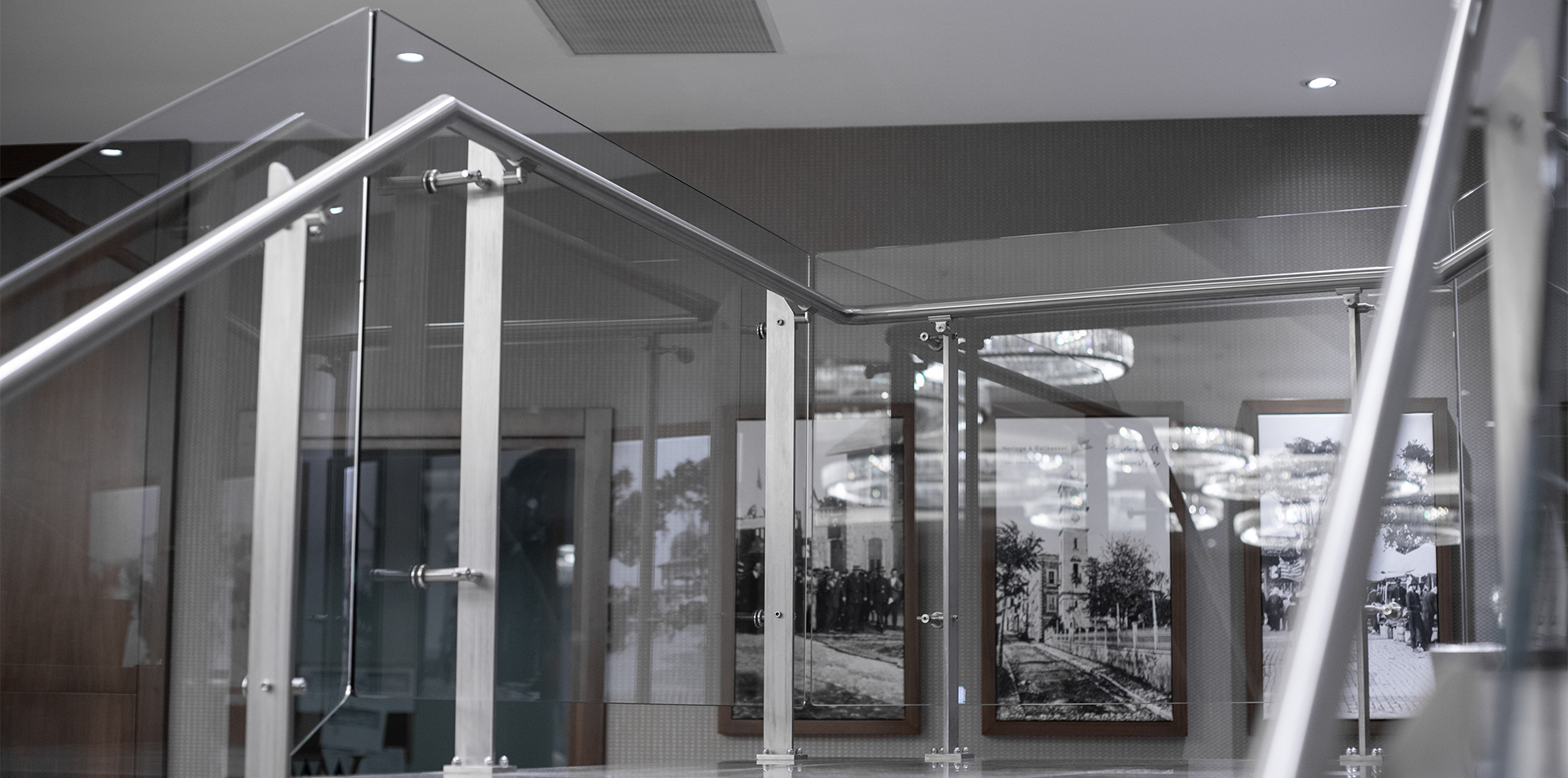
Indoor glass railing has become one of the clearest design signals in contemporary architecture because it protects circulation edges without making the space feel visually closed. In modern homes, offices, hospitality interiors, and mixed-use projects, designers increasingly prefer glass systems that preserve daylight, maintain sightlines, and support a cleaner architectural language across staircases, mezzanines, void edges, and interior transitions. Akos positions its glass railing range around exactly that balance of transparency, safety, strength, and design flexibility.
What gives indoor glass railing its value is not only the visual lightness of glass itself. A stronger system also needs to offer reliable holding power, practical installation, durable materials, and enough design range to work across different architectural styles. On its main glass railing page, Akos structures the category around Premiumline, Endureline, Safeline, and A60, which immediately gives the product family more depth than a single-profile offer.
Akos System brings manufacturer depth to the category
Akos Smart Railings states that it was founded in Konya, Turkey, in 2000 and began manufacturing aluminum railing and glazing systems in 2006. According to the company’s About Us page, its production scope includes aluminum extrusion profiles, balustrade systems, aluminum handrail solutions, aluminum fences, automatic guillotine systems, and automatic garden gates. That background matters because buyers specifying indoor glass railing are usually evaluating more than appearance. They also want confidence in the manufacturer’s technical know-how, production consistency, and architectural systems experience.
That broader capability also supports project-based work more effectively. On its For Architects page, Akos presents itself as a solution partner offering project planning, static calculation, visual design, and assembly guidance for architectural projects. For interior railing applications, that kind of support is especially valuable because stair edges, landing conditions, slab interfaces, and finish transitions often need to be resolved long before installation begins.
A wider system family makes the indoor category more useful
One of the strengths of the Akos range is that indoor glass railing is not treated as one repetitive product. The main category page presents Premiumline as a high-class balustrade system, Endureline as a minimalist option with reliable holding power, Safeline as a rational and installation-friendly system, and A60 as a more flexible family created for different glass-retention needs. That structure matters in interiors because different projects ask for different balances of visibility, detailing, hardware expression, and installation logic.
This range also allows Akos to speak to a wider interior-use scenario without sounding generic. Some projects need the cleanest possible frameless look. Some need a handrail-supported system for more tactile confidence. Others need a base-profile solution that supports cleaner edge detailing. By maintaining several connected system families, Akos gives designers and contractors more freedom to align the railing choice with the character of the interior rather than forcing every staircase or void edge into the same solution.
Premiumline brings cleaner detailing to indoor spaces
Premiumline is one of the clearest examples of how Akos connects visual refinement with execution logic. On the main glass railing page, the company describes it as a high-class balustrade system designed to make areas creative and safe at the same time, while also distinguishing Y, F, and U design directions for different mounting and detailing priorities. That matters for indoor work because minimal profiles and cleaner detailing are often what allow a staircase or mezzanine edge to feel integrated into the interior architecture rather than added afterward.
The PL10 model adds a more technical layer that strengthens this positioning. Akos states that PL10 uses finished profiles and high-strength connection pins to make installation easier, complies with worldwide safety and building regulations, uses a safety wedge system for easier glass installation, allows color customization, supports glass alignment, and offers a listed security load of 1.2 kN with a proven pressure of 1.9 kN. Those details are especially relevant indoors because precision, neat alignment, and clean assembly quality often shape how premium the final staircase or gallery edge actually feels.
Endureline and Safeline strengthen minimalist interior applications
Endureline gives the Akos offer a more restrained and minimalist expression that fits many modern interiors well. Akos describes it as a rich profile option with reliable holding power and minimalist design suitable for different architectures, while also emphasizing wind resistance, strength, design variety, and easy installation across the range. Even though some of those performance signals are broader than indoor use alone, the minimalist positioning is highly relevant for interior spaces that depend on visual lightness and reduced clutter.
The EL51 page makes that system feel more substantial from a technical standpoint. Akos states that EL51 can be used as a six-meter whole-profile system with 8+8 laminated glass, includes glass alignment capability, uses the safety wedge system, supports color customization, and is listed with a 1.2 kN security load. For long indoor runs, such as gallery edges, loft boundaries, or clean stair-side applications, these details help show that the system is not only minimalist in appearance but also designed with installation control and structural clarity in mind.
Safeline adds another useful direction for interior projects where installers and specifiers want a system that emphasizes comfort in assembly as well as architectural fit. Akos describes Safeline as a system that provides comfort in assembly and installation through exclusive designs and rational solutions, while maintaining reliable holding power and suitability for different architectures. For indoor projects, that can be a meaningful advantage because tighter tolerances and more visible finishes often make installation quality even more important than it is outdoors.
Frameless indoor glass railing supports light and openness
For interiors where visual continuity is the main priority, frameless glass balustrades become especially compelling. Akos states that its frameless glass balustrades offer a seamless and contemporary solution for both indoor and outdoor spaces and are made from toughened safety glass. The company also highlights uninterrupted views, enhanced light flow, and suitability for staircases and other spaces where a clear and elegant barrier is desired. That makes the frameless category highly relevant for interior stair voids, atrium edges, open-plan homes, and modern commercial spaces where design teams want maximum transparency without bulky visual interruption.
This frameless direction also supports the way many contemporary interiors are designed today. Instead of using railing as a visually separate object, designers often want the barrier to disappear as much as possible so that flooring, lighting, and architectural lines remain dominant. Akos directly reinforces this design intent by describing frameless balustrades as elegant, minimalist, durable, and compliant with relevant safety requirements for residential and commercial use.
Glass handrails add support without losing the clean look
Not every indoor project wants a fully frameless result. In many staircases and elevated interior zones, a handrail-supported system can provide extra comfort and confidence in use while still keeping the space visually open. On its Balustrades with Handrails page, Akos states that its systems use toughened glass together with high-quality materials such as stainless steel or aluminum for the handrails, and that they are ideal for staircases, balconies, terraces, and other elevated spaces.
That category is especially valuable for interiors because it solves a practical design problem without making the railing look heavy. Akos also notes that handrails do not compromise the aesthetic of the glass system, but instead add a modern touch while maintaining the clean look of the balustrade. In real interior projects, that can be the right balance for spaces that need a stronger sense of tactile support but still want the elegance and lightness associated with glass.
Stair-focused solutions make the category more relevant indoors
Indoor glass railing is often most visible on staircases, and this is where Akos’s wider product ecosystem strengthens the category further. On its Stair Railing page, the company describes its stair railings as combining safety, functionality, and style, and states that they are crafted from materials including stainless steel, wood, and glass. It also emphasizes customization, easy installation, and low maintenance. These points matter because the best indoor stair systems are usually chosen for the way they integrate into the overall interior rather than as isolated hardware components.
Akos’s Glass Balustrade Stairs page extends that relevance by presenting stair-oriented glass systems within the same broader family structure. This helps position the brand more credibly for interior stair applications because it shows that stair use is not an afterthought. It is part of the company’s core understanding of how glass railing works across circulation spaces, design transitions, and architecturally prominent interior zones.
Customization and finish flexibility help interiors feel more intentional
One reason indoor glass railing works so well in high-quality interiors is that it can be tailored to the surrounding material palette. Akos repeatedly emphasizes model variety, different designs, and customization across its stair, handrail, and glass railing pages. That flexibility matters because interior railing often needs to coordinate with wood stair treads, stone flooring, metal finishes, wall tones, and wider architectural detailing rather than operate as a generic standalone product.
The company’s wider handrail and stair content reinforces this point by describing a range of materials, finishes, and design options intended to match specific project needs. In practice, that makes the Akos offer more attractive for designers and contractors working on homes, offices, showrooms, hospitality interiors, and other spaces where visual consistency is as important as structural reliability.
Quality assurance and certifications strengthen trust in the system
Indoor glass railing may look visually simple, but trust in the finished result depends heavily on production discipline and engineering quality. On its Quality Assurance page, Akos states that safety and high product quality are central to its production processes and that it adopts best engineering practices while continuing to invest in innovation and improvement. That message is important in interior projects because visible alignment, clean finishes, and dependable long-term use all depend on how well the system is manufactured in the first place.
The company’s Certificates page adds another layer of credibility by listing Qualicoat Seaside, Qualanod, ISO 14001, ISO 9001, EN 15088, and Giordano certificates for related system lines. Even where a specific certificate is linked to a particular family rather than the phrase indoor glass railing itself, the broader certification structure still helps position Akos as a serious architectural systems manufacturer rather than a generic profile supplier.
A stronger fit for light filled contemporary interiors
What makes Akos especially relevant in the indoor glass railing category is the way it combines visual openness with system depth. The company supports the category through Premiumline, Endureline, Safeline, A60, frameless balustrades, handrail-supported balustrades, and stair-focused product pages, while also reinforcing the offer with architect-oriented support, quality assurance, and visible certification. That combination makes the brand relevant not only for broad searches around indoor glass railing, but also for more specific needs involving stair glass systems, frameless interior balustrades, mezzanine glass guards, and refined glass-and-handrail solutions for modern residential and commercial interiors.