Finding a reliable electric bike without spending a fortune can be challenging, especially if you want the comfort and versatility of fat tires. Fortunately, the electric bike market offers several affordable options for commuters, recreational riders, and people who want a practical alternative to traditional transportation.
If you are searching for a fat tire electric bike under 1000, YVY offers several models worth considering. Its lineup includes different wheel sizes, battery capacities, motor configurations, and braking systems, allowing buyers to compare features according to their budgets and riding requirements.
However, choosing an affordable electric bike is not simply about finding the lowest advertised price. Battery performance, motor specifications, braking capability, rider comfort, and after-sales support can make a significant difference in long-term ownership.
This guide explores what to look for when purchasing a budget-friendly fat-tire electric bike and how to evaluate affordable YVY models before making a decision.
Why Choose a Fat-Tire Electric Bike?
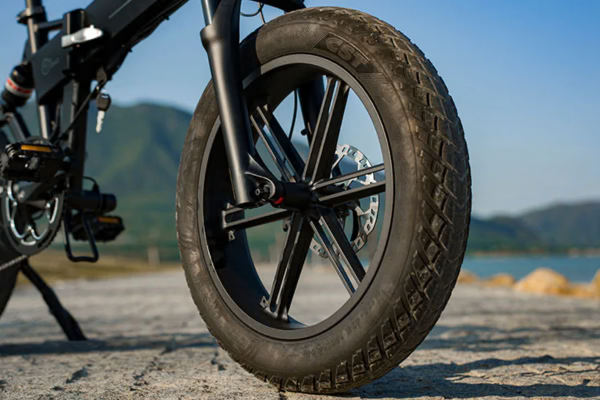
Fat-tire electric bikes are designed with wider tires than conventional bicycles. These tires provide a larger contact area with the riding surface and can improve traction and stability in various conditions.
For everyday riders, this design offers several practical benefits.
First, wider tires can provide additional comfort by helping absorb some road vibration, particularly when used at appropriate tire pressures. This can make commuting on uneven pavement more comfortable.
Second, fat tires offer versatility. Depending on tire design and pressure, they can be suitable for paved roads, gravel paths, compacted dirt, and certain recreational environments.
Third, their wider appearance gives these electric bikes a distinctive style that appeals to riders looking for something different from traditional commuter bicycles.
However, fat tires are not automatically better for every situation. They can increase rolling resistance and overall bicycle weight. Buyers should consider their regular routes before choosing a wide-tire model.
What to Look for in a Budget Electric Bike
Before purchasing an affordable electric bike, it is important to understand which specifications have the greatest impact on everyday usability.
Battery Capacity and Riding Range
Battery capacity should be one of your first considerations. It determines how much electrical energy is available to support the motor and power the bicycle.
Many budget electric bikes use removable lithium-ion batteries. A removable battery can be particularly convenient because you can take it indoors for charging instead of moving the entire bicycle.
When comparing batteries, pay attention to voltage (V) and amp-hours (Ah). Multiplying these values gives an approximate measure of battery energy in watt-hours (Wh).
For example, a 48V 15.6Ah battery provides approximately 749Wh of nominal energy, while a 48V 20Ah battery provides approximately 960Wh.
A higher-capacity battery generally provides more energy, although actual riding distance depends on speed, rider weight, terrain, temperature, and pedal-assist settings.
Motor Power and Performance
Motor power affects how an electric bike delivers assistance during acceleration and riding.
Budget models may advertise different motor ratings, but buyers should distinguish between continuous rated power and peak power.
A higher peak wattage does not necessarily mean that a bicycle can sustain that output throughout a journey.
Consider your typical riding environment. If you mainly travel on flat city roads, you may not need an extremely powerful motor. Riders dealing with hills or demanding terrain may benefit from a more capable motor system.
Also check the local electric-bike regulations before purchasing, as permitted motor power and speed limits vary by location.
Braking System and Safety
Brakes are among the most important components of any electric bicycle.
Mechanical disc brakes are commonly found on affordable models. They are relatively straightforward to maintain and can provide practical stopping performance when correctly adjusted.
Hydraulic disc brakes use fluid pressure and generally offer smoother modulation and reduced hand effort. They can be particularly attractive for heavier bicycles and riders who frequently travel on hills.
Regardless of the braking system, check the quality of the brake components, maintenance requirements, and availability of replacement parts.
Frame Design, Suspension, and Rider Comfort
An electric bike should fit your body and riding style. Check the recommended rider-height range, saddle adjustment, handlebar position, and frame geometry before ordering.
Suspension can also improve comfort when riding over uneven surfaces. However, the presence of suspension does not automatically guarantee a comfortable ride. Tire pressure, saddle design, and frame geometry also matter.
Best Fat Tire Ebikes Under $1000: Affordable YVY Models to Consider
When comparing the best fat tire ebikes under $1000, it is useful to look beyond promotional pricing and examine what each model offers.
YVY has several fat-tire models that have appeared below the $1,000 price point on its US store. Prices and regional availability can change, so buyers should verify the current product listings before making a purchase.
YVY K20 Lite: An Affordable Entry-Level Option
The YVY K20 Lite is worth considering for buyers who want a relatively affordable fat-tire electric bike.
Its listed configuration includes a 48V 15.6Ah removable battery, 20-by-4-inch fat tires, front suspension, a rear shock absorber, and mechanical disc brakes.
The 20-inch wheel platform provides a practical balance between maneuverability and everyday riding comfort.
Its battery capacity may be suitable for commuters with relatively short daily routes and convenient charging access. However, riders who regularly cover longer distances should carefully evaluate their energy requirements.
The mechanical braking system also reflects its budget-oriented positioning. Buyers should consider whether this setup meets their expectations for their riding environment.
Overall, the K20 Lite is an interesting starting point for first-time electric bike buyers who want fat tires without moving into a more expensive category.
YVY K20: A More Feature-Rich Everyday Option
The standard YVY K20 is another model worth evaluating when comparing affordable electric bikes.
Its listed configuration includes a removable 48V 20Ah battery, 20-inch fat tires, and hydraulic dual brakes.
Compared with the K20 Lite, its larger listed battery capacity provides more nominal energy. The hydraulic braking system is another feature worth considering, particularly for riders who prioritize braking feel and control.
The K20 may be a suitable choice for commuters and recreational riders who want additional battery capacity and upgraded braking equipment.
However, the purchase decision should depend on the actual price displayed for your selected regional version. A promotional listing below $1,000 does not guarantee that every regional configuration will remain within that budget.
YVY K16: A Compact Fat-Tire Alternative
The YVY K16 offers a different approach to affordable electric biking.
Instead of using the 20-inch wheels found on the K20 family, it features a compact 16-inch fat-tire configuration.
Its listed specifications include a 48V 20Ah battery and a 1500W motor designation.
The smaller wheel platform may appeal to riders who have limited storage space or prefer a more compact bicycle. It can also be worth considering for people who find larger electric bikes difficult to maneuver.
However, smaller wheels create a different riding experience. Buyers should evaluate their preferred riding surfaces, rider fit, and comfort before selecting this model.
The K16 is particularly interesting for people who want a compact fat-tire design without sacrificing the larger battery capacity found in some budget-oriented models.
Affordable YVY Ebike: How to Choose the Right Model
Choosing an affordable YVY ebike becomes easier when you start with your actual requirements instead of focusing only on advertised specifications.
If your main priority is keeping the initial purchase cost low, the K20 Lite deserves attention. It offers a 20-inch fat-tire platform and a removable battery in an entry-level configuration.
If you want a larger battery capacity and hydraulic brakes, the standard K20 may be a better candidate, provided its current regional price fits your budget.
If compact dimensions are more important than having larger wheels, the K16 is worth comparing.
Think about how you will use the bicycle during a typical week. A short daily commute requires a different configuration from extended weekend rides or frequent journeys over uneven roads.
The right model should provide the features you need without making you pay for capabilities you are unlikely to use.
Is Buying a Fat-Tire E-Bike Under $1,000 Worth It?
An electric bike below $1,000 can be a worthwhile purchase, particularly for people entering the e-bike market for the first time.
At this price level, buyers can find models with removable batteries, wide tires, suspension components, and practical commuting features.
However, affordability usually involves trade-offs.
Some models may have smaller batteries, mechanical brakes, basic displays, or simpler components. Others may provide better specifications but require buyers to spend closer to the upper end of their budget.
It is also important to consider expenses beyond the initial purchase price.
A realistic budget should account for a suitable helmet, lights, a lock, maintenance, replacement tubes, and other riding essentials.
Check the warranty terms and identify whether replacement batteries, brake components, and other spare parts are available.
An affordable electric bike is a good investment when its total ownership cost remains manageable and its specifications match your needs.
Budget Electric Bike Buying Guide: Common Mistakes to Avoid
A good budget electric bike buying guide should also explain what not to do.
One common mistake is choosing a bicycle based entirely on motor wattage. Motor specifications matter, but battery capacity, torque, controller performance, and braking equipment are equally important.
Another mistake is trusting advertised maximum range without understanding the testing conditions. Maximum-range figures are often achieved under favorable circumstances and may differ significantly from everyday riding results.
Ignoring rider fit is another problem. An electric bike that is uncomfortable to ride will not become a good purchase simply because it offers impressive specifications.
Finally, do not overlook shipping costs, regional product variations, warranty coverage, and local regulations.
Taking time to compare these details can help you avoid unnecessary expenses and choose a bicycle that remains practical over the long term.
Final Verdict: Finding the Right Affordable Fat-Tire E-Bike
Finding a suitable fat-tire electric bike under $1,000 is possible if you focus on the features that matter most to your riding needs.
YVY offers several models worth comparing, including the K20 Lite, K20, and K16. Each has a different combination of wheel size, battery capacity, and equipment.
The K20 Lite is a sensible starting point for budget-conscious buyers. The K20 offers additional battery capacity and hydraulic brakes, while the K16 provides a more compact wheel configuration.
Before purchasing, check the current regional product price, available configuration, battery specifications, warranty, and shipping conditions.
Ultimately, the best affordable electric bike is not necessarily the cheapest one. It is the model that delivers the right balance of comfort, reliability, safety, and value for your everyday riding requirements.